BIM Crusader Turned AECO Tech Explorer | Speaker | AI Assisted Coder | Autodesk Expert Elite | 25+ years in AECO | Technical Success Manager at Newforma. Opinions expressed are my own unless I borrowed them. Cover photo by: Devin Henry
Solving the mystery of your JSON, one field at a time. 🕵️.
I have been doing a lot of work with JSON lately, which got me thinking. There has to be a better way to view all this data.
Technically, JSON is human-readable. But once you are dealing with hundreds or thousands of data points from an API response, it quickly stops feeling very human-friendly. Large responses turn into walls of nested objects and arrays, and even with formatting or collapsible trees it can still be difficult to quickly find the pieces of information you actually care about.
JSON is technically human-readable. Until it is 5,000 lines long.
Remember when vibe coding felt like magic? The thrill of fast wins, the rush of ideas turning into working code before your coffee got cold. Then came the hangover, the bugs, the rewrites, the weird “why did it do that?” moments that made you question everything.
Welcome to The Reality.
Vibe coding isn’t about chasing magic. It’s about trusting the tool and mastering the craft.
This is where the dust settles. Where the hype cools down and what’s left is what actually works. Vibe coding isn’t a revolution anymore, it’s just part of the workflow. A tool that sits beside your IDE (that’s VS Code for me), your notebook, and your morning playlist. Not perfect, not broken, just… normal.
It’s not about what vibe coding was, it’s about what it is.
Remember the end of The Good? That pure buzz when code just vibes, ideas flying faster than your fingers while your AI buddy cheers you on. But then something changes. It gives you, “You’re right, this is wrong, let me fix it,” and you get the same wrong code again. And again. And again. Suddenly the magic fizzles. The vibe stops vibing.
That’s where this part of the story begins.
Starting a build with vibe coding feels effortless. Finishing it depends on how much frustration you’re willing to outlast.
This is Part Two of Vibe Coding: The Good, The Bad, and The Reality, the moment we trade in our white hats for black ones and talk about what happens when the glow fades.
Remember your first hackathon? That wild, caffeine-fueled moment when code actually worked on the first try? Even if you’ve never been to one, you know the feeling when everything just clicks and ideas start to flow faster than you can type. Vibe coding feels like that, only this time it happens on an ordinary Tuesday afternoon with no sleep deprivation required.
This post is part one of the three-part series “Vibe Coding: The Good, The Bad, and The Reality.” In this first chapter, we explore the excitement, creativity, and early wins that make vibe coding feel almost magical.
Vibe coding isn’t about knowing everything. Nope! It’s about staying with it long enough to build something real.
Vibe coding lives somewhere between creative flow and AI-assisted development. It is the new rhythm of building software fast, playfully, and with fewer blockers. It’s not about understanding every line behind the curtain, and there’s no need for perfect syntax or detailed documentation. It’s about energy. You are riffing with an AI coding BFF, chasing the spark that turns ideas into working prototypes before your focus fades.
Who’s a good boy? DynaFetch always brings back the data you need. 🐕
For about a month leading up to #AU2025, I’ve been “Vide Coding” with my coding “bestie” Claude (from Anthropic) on our very first custom Dynamo package. DynaFetch brings modern, reliable REST API integration to Dynamo 3.0, letting you connect to external data sources with community-driven, open-source functionality.
This project started because I’ve long relied on the excellent custom package DynaWeb by Radu Gidei. Unfortunately, it isn’t compatible with Dynamo 3.0+, and staying on older versions is becoming less and less practical.
🕵️♀️ Sleuthing through your BCF files so you don’t have to.
Built over a long weekend using Vibe Coding and a solid assist from AI, BCFSleuth is a lightweight, browser-based app that lets you explore and export BCF files (2.0, 2.1, 3.0) with zero setup.
🔍 Quickly preview BCF data 📁 Export to clean, structured CSV or Excel 📸 View and export images 🛡️ No servers — runs entirely client-side 📱 Mobile-friendly for on-the-go use
Have you ever wondered what mobile device usage is like in the AECO? For an upcoming presentation I’m doing, this exact question came up. I found some data online and in some older AECO and ConTech reports I had, but nothing for 2024.
There is a new technology that is emerging in the AECO+ industry. It is called Rhino Inside Revit and it allows Revit to access all of Rhino’s powerful functionally including Grasshopper.
So, we decided to avoid turning this session into another “intro to Rhino.Inside.Revit”. Instead, let’s look at Grasshopper for Revit in a different light. This session will show all of you Dynamo for Revit users how to make equivalent functions in Grasshopper including creating Revit Beams, Revit Walls and even Moose…
Let’s find out what Grasshopper for Revit is really made of!
So if you want to have a fun time please join us and don’t forget to bring all your questions and concerns up to the presenter to keep the session lively.
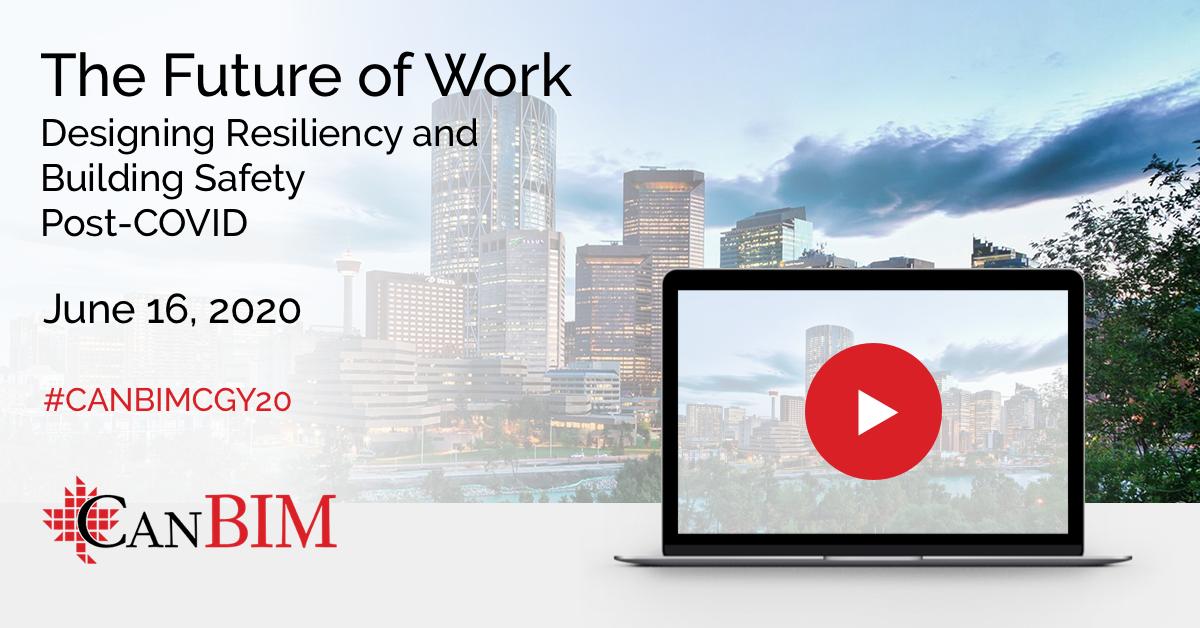
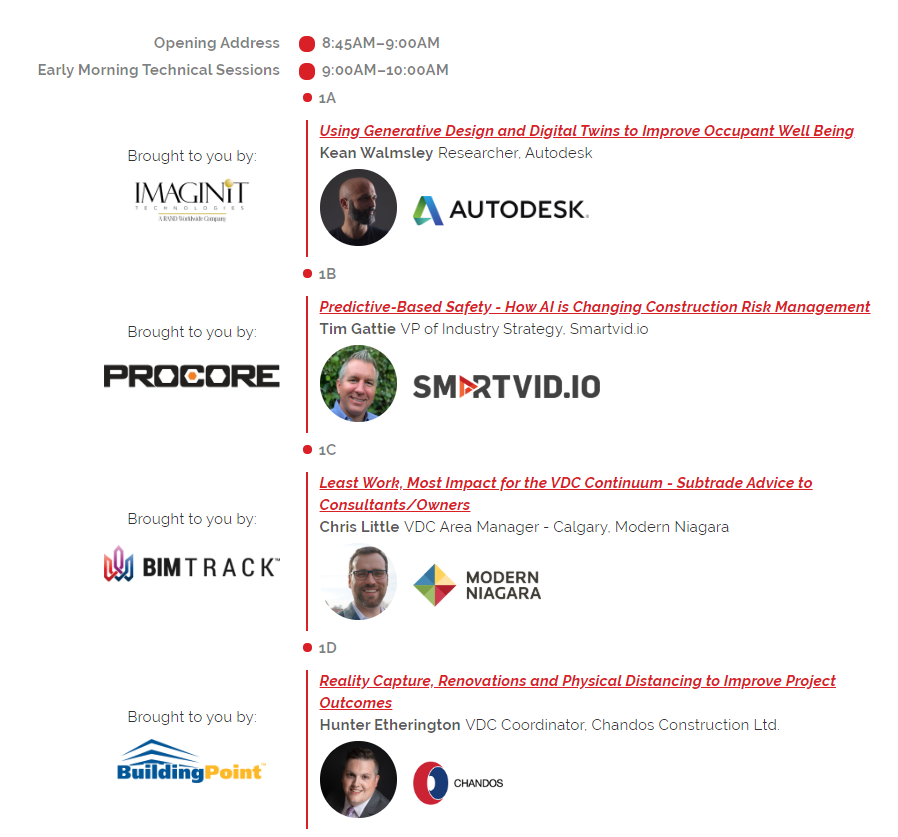
If you have not signed up yet for the CanBIM Calgary Virtual Session next week, what are you waiting for!
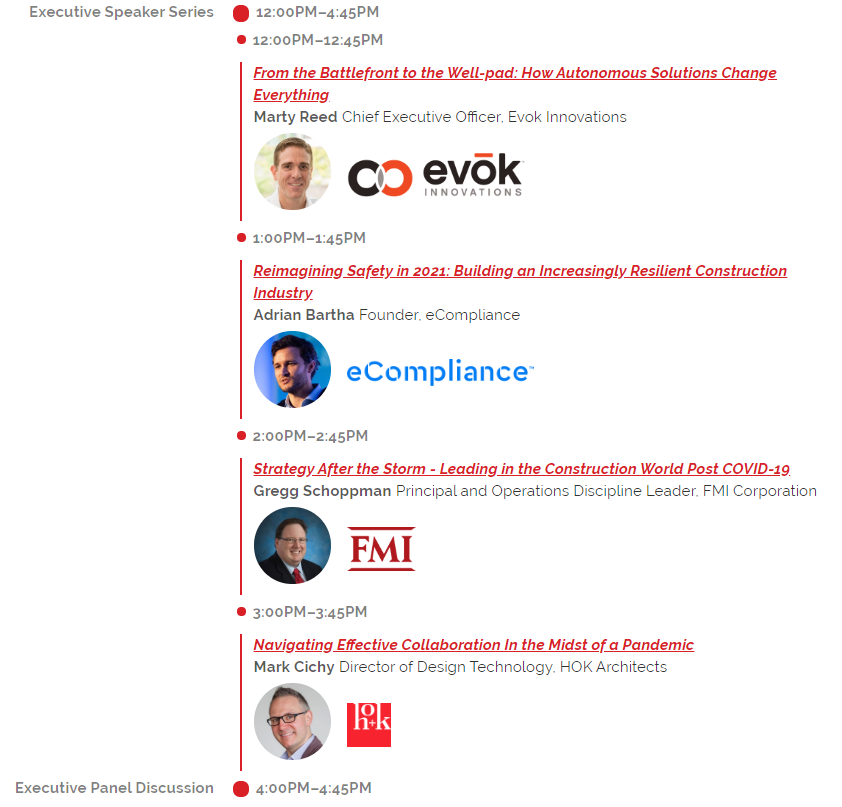
This event is Tuesday, June 16th, 2020, 8:45 am – 4:45 pm EDT
The Future of Work Designing Resiliency and Building Safety Post-COVID
Predicting how our world will be impacted due to COVID-19 is difficult. Obviously, this crisis has already affected the building industry from a productivity perspective and will have a permanent effect on how we consider safety for our workers. As we consider these impacts we should expect an additional level of attention in design to be paid to Infectious Disease Control beyond Hospital environments. We should, therefore, expect that architectural design and specifications, specifically the physical gateways that control our built environment, will accommodate the technology systems and processes necessary to keep Society safe. What role will infectious disease specialists play in the design process? How will the building’s IOT strategy accommodate and collect the data required to help Society perform epidemiological contact tracing? What will be the new requirements for design? How will this impact existing buildings and future projects? What are the long term supply chain implications? We are gathering the top minds in Canada to start the discussion around this subject. Please join us!
A collection of observations and opinions from myself and my friends around the world in relation to the Architecture, BIM, Sustainability, Technology & Learning in the AEC industry. There's no space here for 'old skool' thinking.
A meeting place of worldwide BIM managers and BIM professionals to gather information regarding BIM, BIM software, BIM classes, BIM conference, BIM standards, BIM definition, BIM consulting.













 The BIMsider