
When the Vibes Wear Off
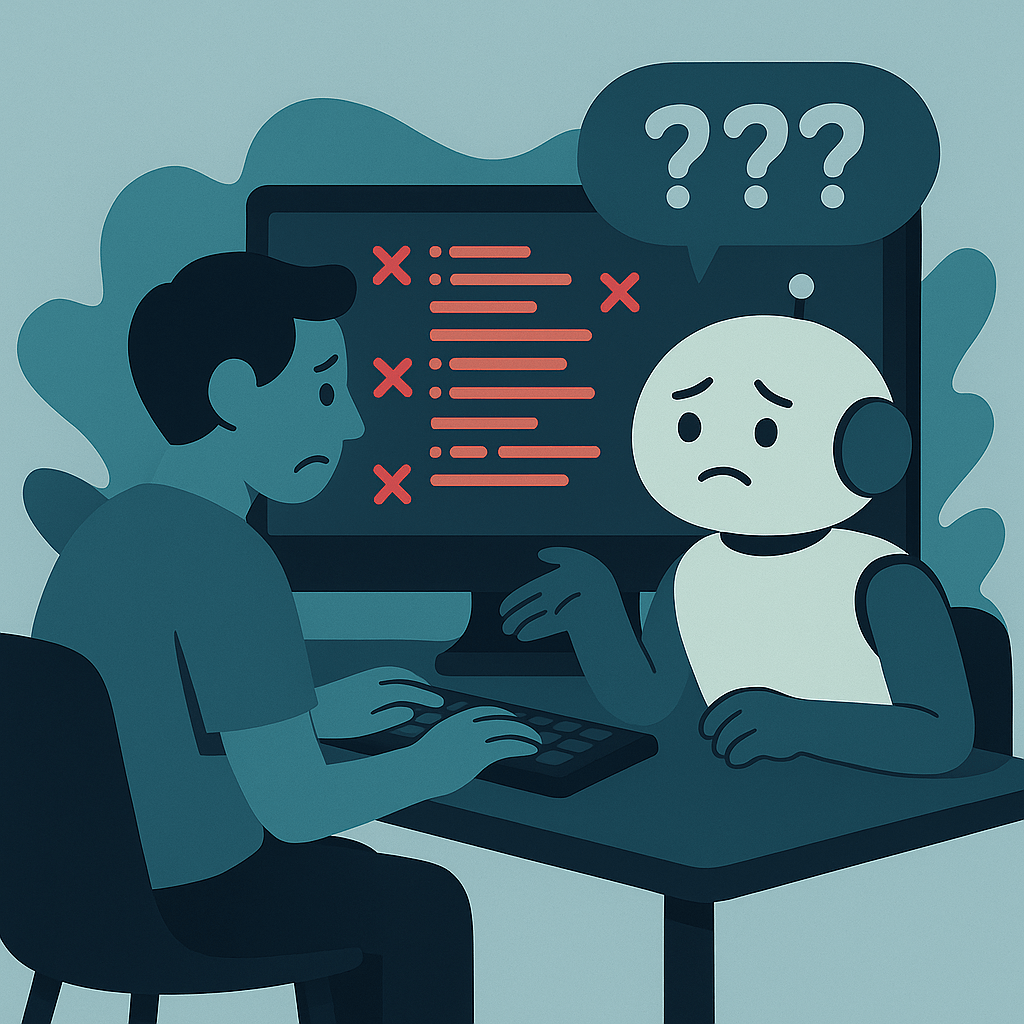
Remember the end of The Good? That pure buzz when code just vibes, ideas flying faster than your fingers while your AI buddy cheers you on. But then something changes. It gives you, “You’re right, this is wrong, let me fix it,” and you get the same wrong code again. And again. And again. Suddenly the magic fizzles. The vibe stops vibing.
That’s where this part of the story begins.
Starting a build with vibe coding feels effortless. Finishing it depends on how much frustration you’re willing to outlast.
This is Part Two of Vibe Coding: The Good, The Bad, and The Reality, the moment we trade in our white hats for black ones and talk about what happens when the glow fades.
The Fade
It always starts small. Maybe your AI spits out the same broken “code” three times in a row. Or your “one-hour project” quietly eats the entire weekend. The thrill that once felt endless now feels like déjà vu.
You start wondering if vibe coding is just smoke and mirrors, and you’re stuck in the funhouse with no clear way out, so you bail. But bailing means you never see the finish, and there’s the rub.
In The Good, vibe coding was all flow and dopamine hits. Here, it’s about what happens when that flow becomes a trickle, and maybe it’s time to turn off the tap and try something else.
That’s the first crack in the vibe.
The Illusion of Speed
Vibe coding is fast… at first. But as Admiral Ackbar once said, “It’s a trap!”
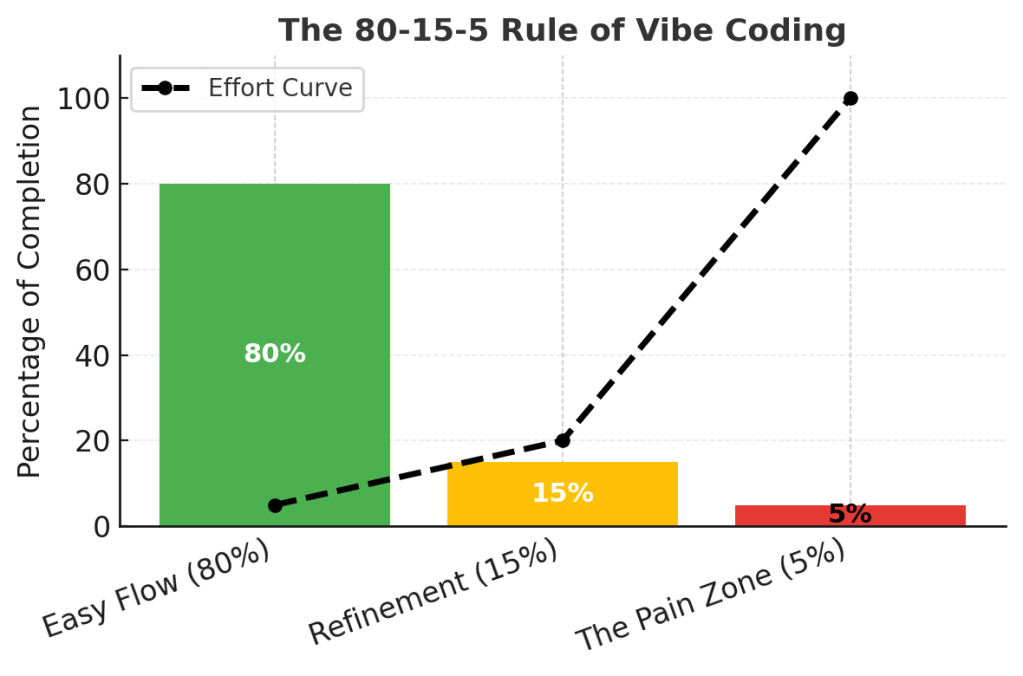
I call it the 80-15-5 rule (like the 80-20 rule, but harder when your AI already burned through the easy part).
The first eighty percent of the work feels instant. You talk, it builds.
The next fifteen percent slows down as you start fixing the AI’s “close enough” ideas and trying to work through what you don’t know about coding along with what your AI co-worker (no longer your BFF) doesn’t know about your project. The stuff that is second nature to you becomes painful to explain again and again.
The last five percent? That is where you start questioning your life choices.
What really stings is that it worked before. You know it did. Same idea, same approach, maybe even the same prompt. But now every run feels cursed. You tweak, retry, rename variables, even whisper nice things to the model, and it still fails. The AI is not learning; it is gaslighting you. Each fix spawns another issue, and the loop keeps spinning until you give up. That is how another vibe-coding project ends up in the “almost finished” pile, quietly collecting digital dust.
AI makes starting easy but finishing hard. Because polishing, debugging, and conforming to standards are still human work, and humans get tired.
Hidden Costs
Then there is the stuff you don’t see until the invoices arrive.
- Subscription stacking – Twenty bucks for this LLM, fifteen for that API, ten for hosting. Before long, your “free” side project costs more than your Spotify family plan. And if you are using the “free” version of your favorite LLM, remember, your data is the real cost.
- API toll booths – Every regenerate, every autocomplete suggestion quietly burns tokens.
- Privacy potholes – Try explaining vibe coding to your IT security team while the company firewall blocks every AI endpoint.
- Vendor lock-in – Once your project lives in someone else’s cloud, exporting it back to your local repo feels like trying to leave a timeshare.
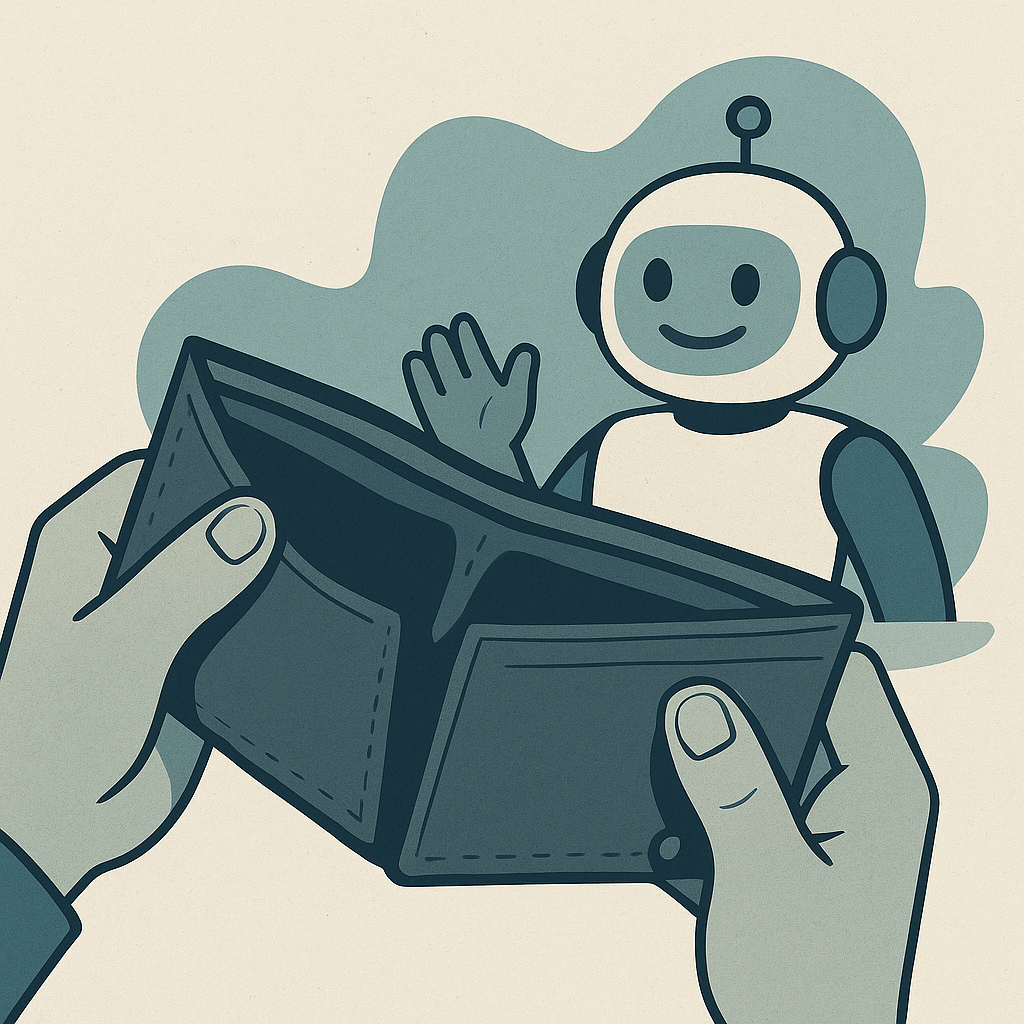
For AECO teams bound by strict data policies and client NDAs, these costs are not just money. They are risk.
And none of this is new. That is part of the irony. Vibe coding was supposed to be the escape, a way to step outside the big ecosystems, go open source, or embrace that maker mindset again. Build your own tools. Prototype faster. Stay in control.
But there is always a gotcha. A hidden dependency, a feature wall, a new limit. And here we are again. Sometimes the biggest barrier to vibe coding is not creativity. It is compliance.
Skill Rot and Repetition
At some point the prompts start to sound the same.
“Write a the code that…”
“Now make it prettier.”
“Now fix the bug you caused fixing the last bug.”
The more you rely on the AI, the more your own instincts fade. You use to question what came back after your prompts, not, ah its good enough. Creativity, and your original idea give way to the quicker autocomplete answer. Your inner problem-solver goes quiet while your prompt history grows louder.
What once felt like jamming to “Master of Puppets” with an AI bandmate turns into that elevator music you hate in background, but barely notice it. You and and your AI rocker went form the mosh pit to the library and it happened faster then your first vibe coding app.
You still type, it still responds, but it all feels routine. The spark that made it fun becomes another to-do list item. That’s when you realize the only thing still vibing is the keyboard.

The Fatigue Factor
It’s fun until it’s not.
There’s a special kind of burnout that comes from talking to machines all day. The constant context resets, the rewrites, the endless cycle of prompting and re-prompting. You start wondering whether the AI is getting lazier or if you are.
The truth? Both.
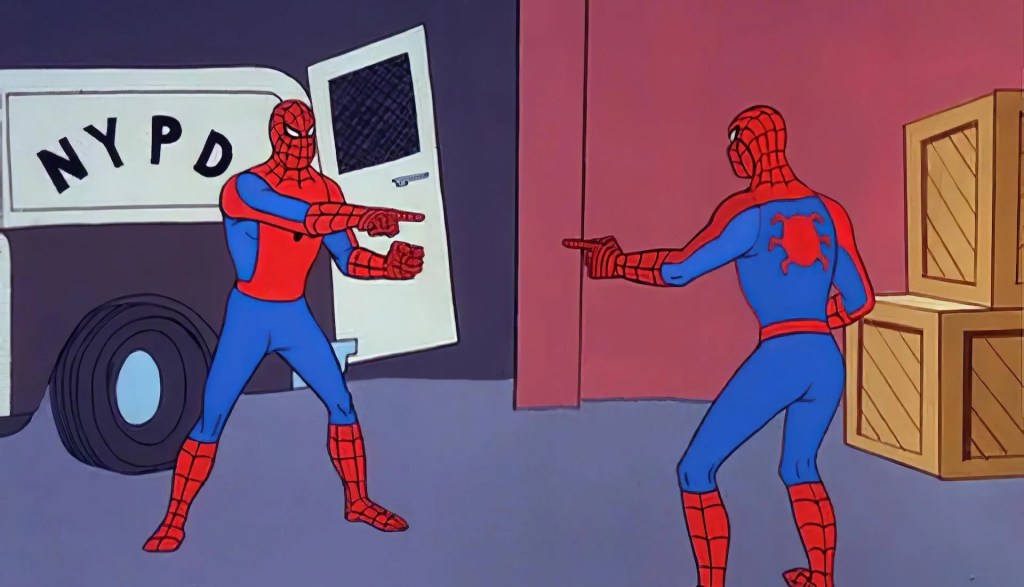
Even the best tools repeat patterns because that’s what they learn from. Without intentional breaks or real human creativity added back into the mix, everything starts to blur. Same syntax, same solutions, same vibe.
You go from “Wow, it built an app in an hour!” to “Why does every app I build look the same?”
Takeaway — When the Vibe Breaks
Vibe coding still works. It still helps you move faster, test ideas, and rediscover the fun side of building. But the real lesson from The Bad is that momentum without mastery only gets you so far.
When the vibe breaks, structure saves you.
When the magic fades, skill brings it back. Not because you know how the trick works, but because you know how to do it.
And that trick is knowing when to let the AI be AI and when to take control (and probably start a new chat). That balance is what turns quick wins into lasting progress.
Because in the end, vibe coding is not bad, it is misunderstood. Understanding that changes everything. You stop expecting it to “just do it” and start learning how to make it work with you. That is the real world of vibe coding, somewhere in the middle.
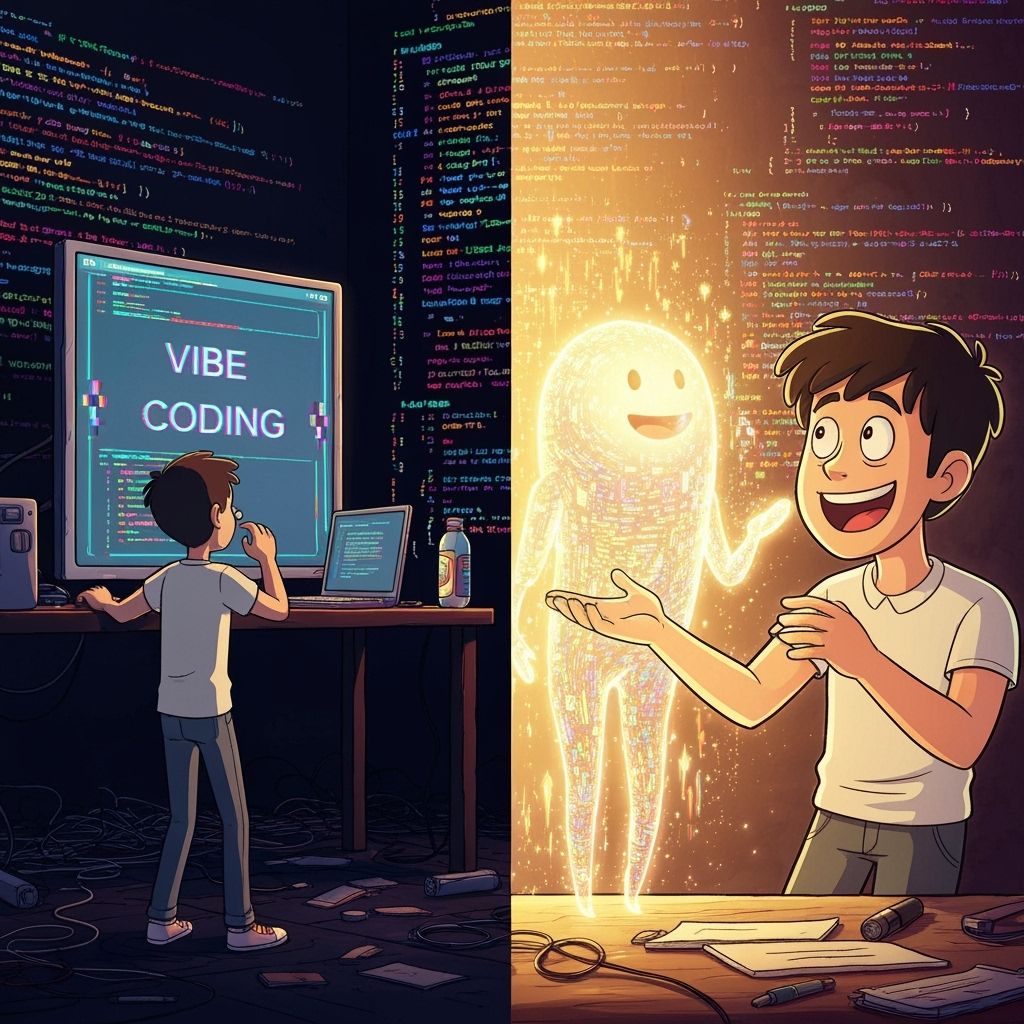
Next time, in the final part, we settle into the middle with practical tips for vibe coding, and see what vibe coding really looks like once the dust settles in The Reality.
(And yes, this post was vibe coded too. Even when the vibes broke, we kept editing until something real came through. That is the beauty and the frustration of vibe coding. See you in The Reality.)

Until next time, keep the vibes going because the reality is better than you think.

All the Links: bio.link/thebimsider

 The BIMsider
3 thoughts on “Vibe Coding: The Bad”